
Gullfoss Waterfall
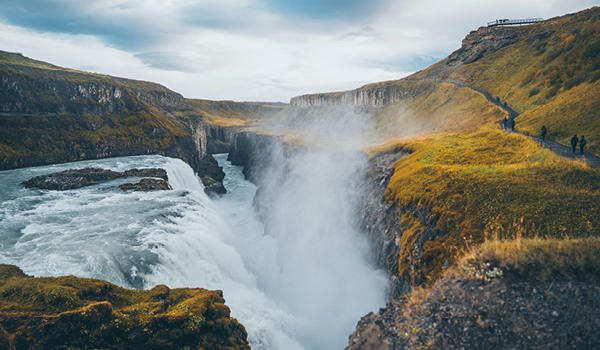
Gullfoss, meaning “Golden Falls,” is one of Iceland’s most breathtaking natural landmarks and the crown jewel of the Golden Circle. Located in the Hvítá River canyon in southwest Iceland, it is famous for its immense power, beauty, and unique double cascade that plunges deep into a rugged gorge.
The waterfall is fed by glacial meltwater from the Langjökull glacier, traveling through the Hvítá River before dropping 32 meters into a narrow canyon. The golden mist that rises from the falls on sunny days inspired its name, as the sunlight often creates shimmering rainbows and a golden glow over the water.
Gullfoss is not just a waterfall to see. It is a place to feel. The thunder of water, the spray carried by the wind, and the dramatic landscape combine into one of the most unforgettable sights in Iceland.
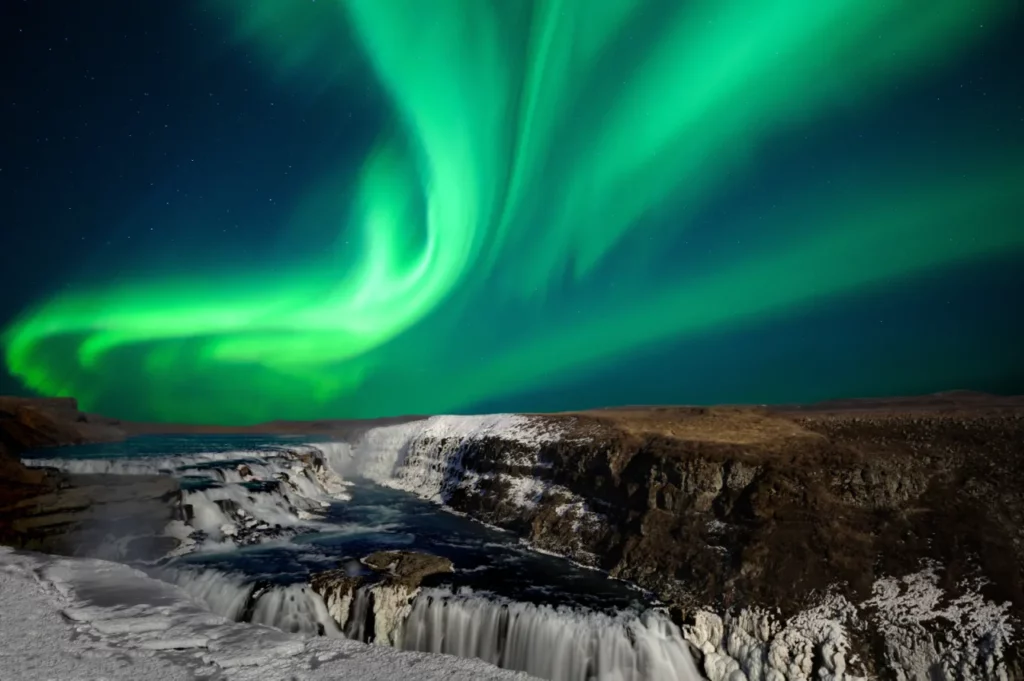
The Formation and Power of Gullfoss
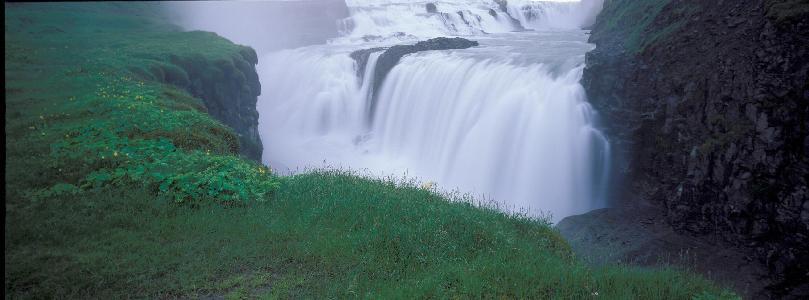
Thousands of years ago, during the last Ice Age, glacial floods carved the Hvítá canyon and created the steps that form Gullfoss today. The water first drops 11 meters over the upper tier and then another 21 meters into the lower gorge, producing a constant roar that echoes through the valley.
On average, around 140 cubic meters of water flow over the edge every second, but during floods that number can multiply several times. The water cuts through basalt and sandstone layers, shaping the canyon deeper every year.
The viewpoint above the falls offers a full panoramic view, while lower walking paths bring you close enough to feel the mist on your face.
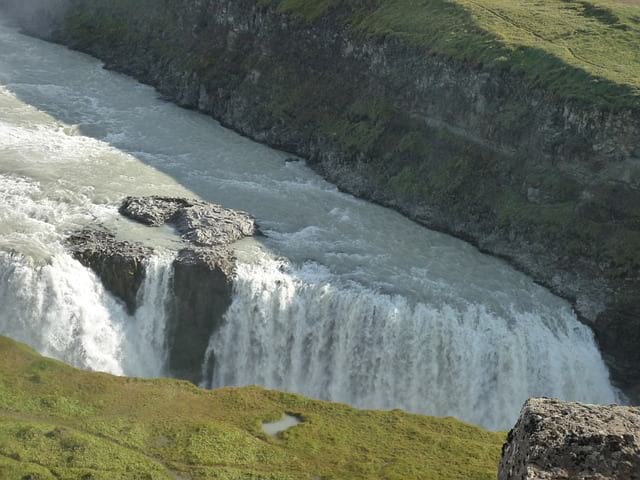
Experiencing Gullfoss
Visiting Gullfoss is a full sensory experience. The thunder of water can be heard long before you see it, and mist fills the air even hundreds of meters away. The energy of the falls feels almost alive, changing constantly with light and weather.
A network of walking paths and viewpoints surrounds the waterfall. The upper viewpoint near the parking area offers a wide view across the gorge and the two-tiered cascade. The lower path, open in summer, brings you closer to the water where you can feel the full force of nature at your feet.
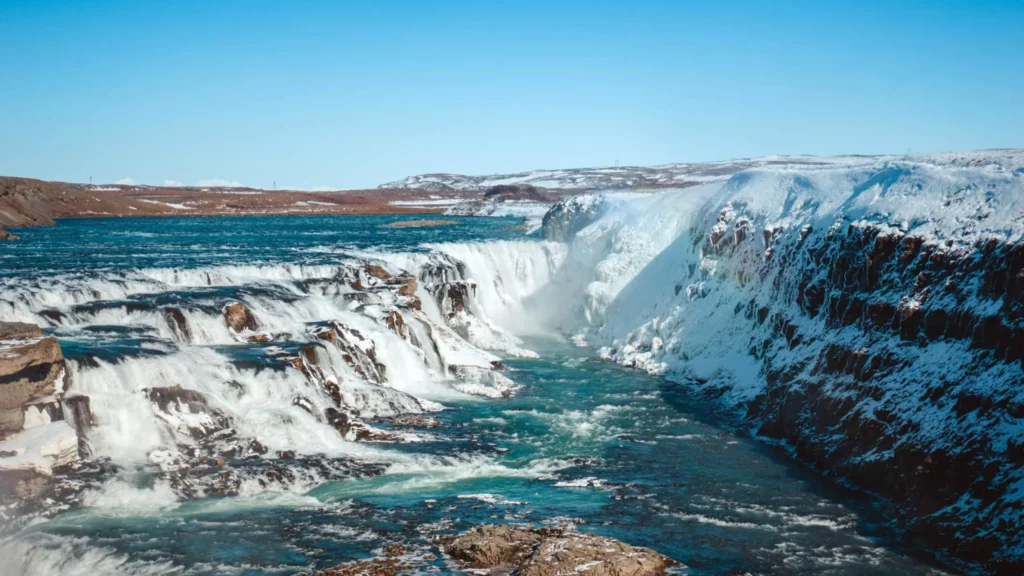
During sunny days, rainbows arch across the canyon. In winter, the landscape turns white and frozen spray creates sparkling ice formations along the cliffs. The contrast between the icy stillness and the roaring water makes Gullfoss equally impressive in every season.
History and Preservation
Gullfoss has a special place in Icelandic history. In the early 1900s, foreign investors attempted to harness the waterfall’s energy for a hydroelectric plant. The proposal sparked public resistance and led to one of the country’s first environmental protection movements.
A young woman named Sigríður Tómasdóttir, the daughter of the local farmer who owned the land, fought fiercely to protect the waterfall. She walked barefoot to Reykjavík several times to protest and raise awareness. Her efforts succeeded, and Gullfoss was eventually preserved as public land.
Today, a memorial stands in her honor above the falls, reminding every visitor that nature’s beauty is worth defending.
Golden Circle Tours
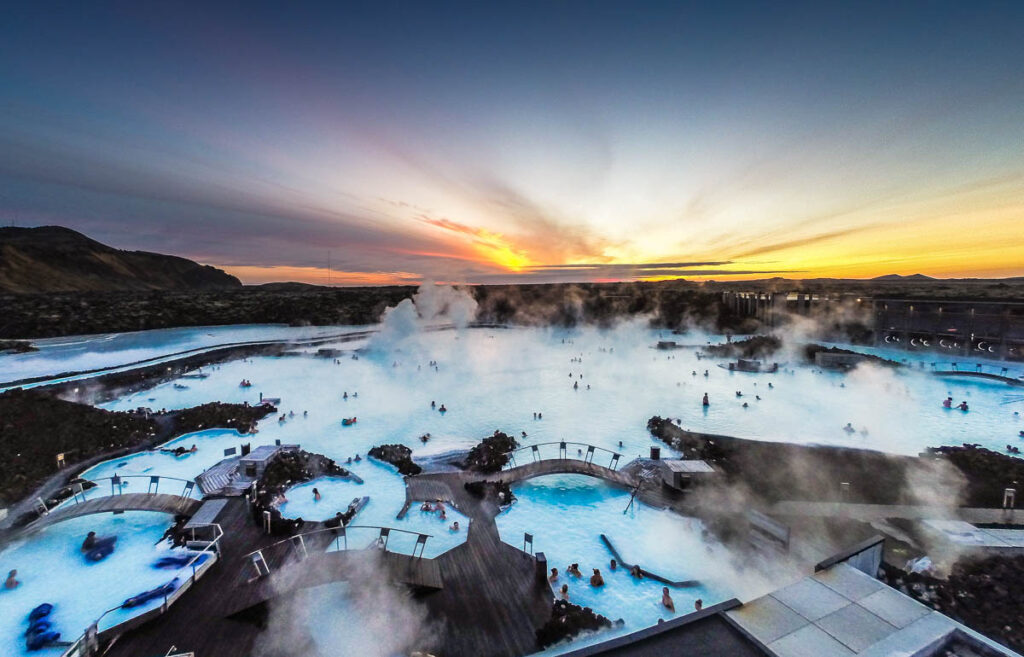
- 11 Hours
- Easy
- Reykjavík
Iceland´s most famous beauty spots and the world-renowned Blue Lagoon
30.900 ISK
Ticket included
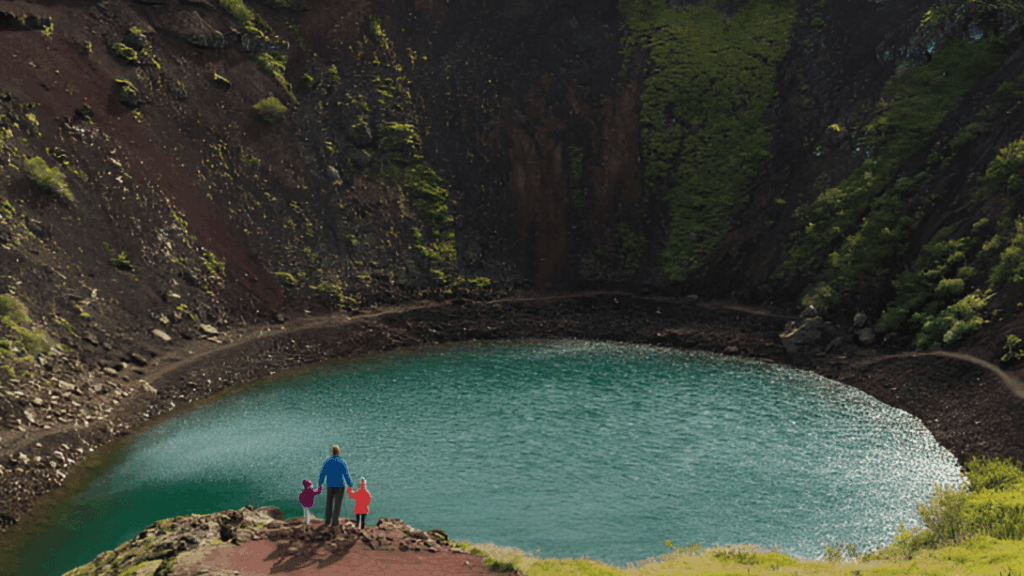
- 8 Hours
- Easy
- Optional
Explore waterfalls, Black
Travel in comfort at your own pace with a guide in Multi-languages.
185.000 ISK
Private
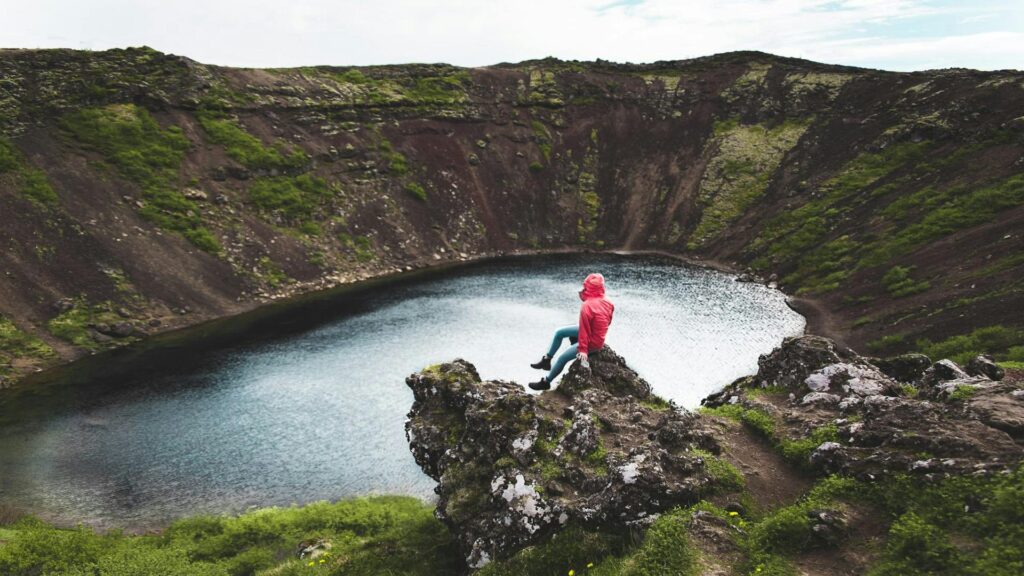
- 8,5 Hours
- Easy
- Reykjavík
Visit Gullfoss, Geysir, Þingvellir and Kerið Ctrater on this Grand Golden Circle Tour
10.990 ISK
Popular
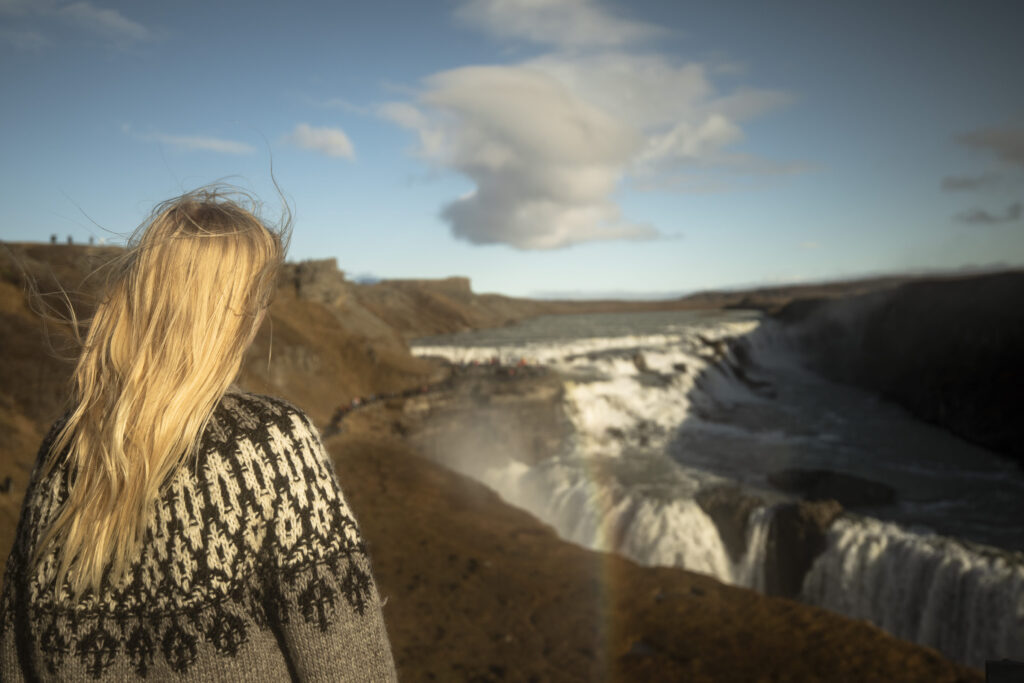
- 9Hours
- Easy
- Reykjavík
Our Premium Golden Circle tour with Friðheimar Geothermal Greenhouse
14.490 ISK
Small Group
Seasonal Visiting Guide
Summer (June to August)
The paths are clear, the water flow is strong, and daylight lasts almost all night. Rainbows are frequent, and the lower trail to the edge of the falls is usually open.
Autumn (September to October)
Golden light and fewer visitors make autumn one of the best times to visit. The surrounding hills glow in warm tones, matching the waterfall’s name perfectly.
Winter (November to February)
Snow and ice transform Gullfoss into a dramatic frozen landscape. The main paths remain open but can be slippery, so wear good shoes. The falls stay powerful even in the coldest months.
Spring (March to May)
The river swells with glacial meltwater, and the canyon fills with mist. Birds return to the area, and the falls are surrounded by vibrant spring colors.

The Landscape Around Gullfoss
The surrounding Hvítá Valley is shaped by volcanic and glacial forces. The wide plains above the gorge are covered in moss and hardy vegetation that survives the harsh winters. Looking down from the viewpoint, you can see how the river twists and disappears into the narrow canyon.
On calm days, you can hear the deep rumble of the falls echoing through the valley. On windy days, spray rises high above the cliffs, forming a silver mist visible from kilometers away. The air feels charged, and even short visits often leave people standing quietly in awe.
Visiting Information
Location: Along Route 35 in southwest Iceland, about 115 kilometers from Reykjavík.
Parking: Large parking areas above the falls with easy access to paths.
Facilities: Visitor center, café, restrooms, and souvenir shop near the upper viewpoint.
Accessibility: The upper viewing platform is accessible year-round. The lower trail is open in summer and may close during icy conditions.
Safety: Stay behind barriers and railings. Rocks can be slippery due to mist and spray.
The Spirit of Gullfoss
Gullfoss is more than just one of Iceland’s waterfalls. It represents the connection between Icelanders and their natural environment. It is a symbol of power, purity, and pride.
Standing at the edge, you can feel the deep vibration of the ground and the spray on your face. The sound is endless, like the heartbeat of the island itself.
No photo or description can replace the experience of standing there in person, watching tons of water fall into the earth with unstoppable force.
Visiting Gullfoss reminds you why Iceland is often called the land of fire and ice. It is a perfect balance between beauty and strength, chaos and calm.
Every drop of water that falls here has traveled from glacier to river to canyon, continuing the same natural cycle that has shaped Iceland for thousands of years.
Is Gullfoss free to visit?
Yes, there is no entrance fee for visiting Gullfoss. Parking is also free, and the site is open year-round.
Can I visit Gullfoss in winter?
Yes. The waterfall is open in all seasons. The upper viewing area remains accessible, although paths may be icy, so it is important to wear warm, waterproof clothing and shoes with good grip.
What is the best time of day to visit?
Early morning or late evening provides the softest light and fewer crowds. In the afternoon, the sunlight often creates beautiful rainbows over the falls.
Is the lower path to the waterfall always open?
No. The lower path is closed during winter and sometimes in early spring when conditions are icy or unsafe. It usually opens in late spring and remains open through summer and autumn.